
wRITING ONBOARDING “Playbooks”
Role: Part of a team of 3 writing copy for onboarding material
Stakeholders: Multiple department heads across the business
Tools used: Google Docs, Asana (for project management)
As with any new job, it is easy to become overwhelmed with all the information to learn.
For GlobalWebIndex, this is no different. New starters are expected to learn about the product, the research methodology, and the history of the company, all in a relatively short amount of time, and several introduction sessions with other departments.
what’s the Problem? 🤔
In fact, it became apparent that there was no simple (and consistent) way for new starters to learn the ropes about the business. This presented a problem:
How do we onboard new starters with all the relevant information they need, in an easy-to-digest format?
At that time, there were several (trust me, that’s being modest) onboarding documents, presentations, recordings, and meetings a new starter could watch or attend, and still have no coherent understanding of not necessarily how the business operates, but how it works together across multiple departments.
what’s the aim? 🎯
In line with other company training objectives, the aims for this project were simple (more or less):
Come up with a unified style of writing and simplify training collateral in to several “easy-read” documents
Collaborate with design to unify the look and feel, ready for print or digital mediums
Writing: the science behind it 🔬
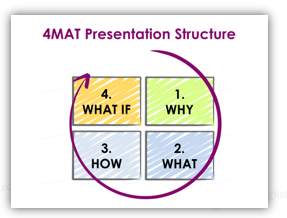
Image retrieved from https://blog.infodiagram.com/2016/08/evaluate-4mat-presentation-engagement-diagram.html
As someone who loves coaching (and learning of course), I have a good understanding of different learning methods, and their application across multiple scenarios.
One method I always enjoy referring to is called 4mat, and is used in both coaching and delivering presentations. More information on this method can be found here.
Essentially, 4mat is broken down in to four categories, of which can vary depending on the context they’re applied to, however in principle they mean the same. For this project, I went with this approach:
Why?
Why are you telling me this information? Why do I need to know?
What?
What is it that I’m learning about?
How?
How do you/I do this thing you’ve just told me about?
What if? / aka “so what?”
What can I do with this information? What does it mean?
With this in mind, I discussed with the other two writers in my team whether this approach seemed reasonable and made sense when considering our task of collating and condensing information for new starters to learn from.
“This makes so much sense.”
With that nod of approval, we each took on a few playbook topics (based on business area) with myself taking data collection, revenue products, and the platform.
Condensing the information 👨💻
One of the biggest challenges faced in this project was the amount of information there was to try and put in a small “playbook” style format.
A particular piece of collateral about the business Research and Methodology, had a total of 36 pages 🤯.
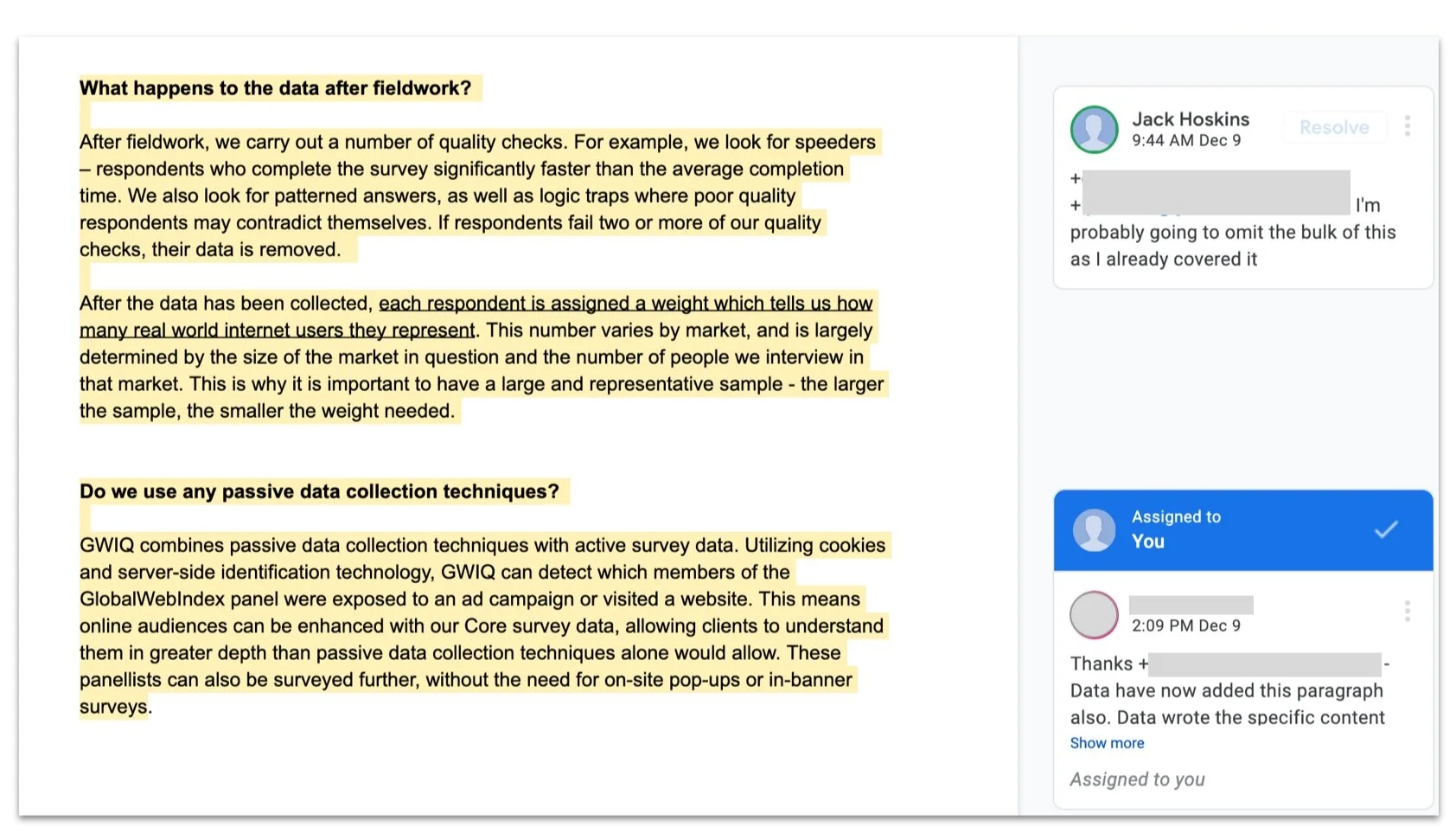
Another challenge with this project was collaborating with other departments. Naturally they are experts of their field (though not necessarily trained writers), therefore it was difficult to convince them that some pieces of information was simply not necessarily for any new starter to learn.
Thankfully, we reached agreement on the format and content chosen for each book, and they began to take shape…
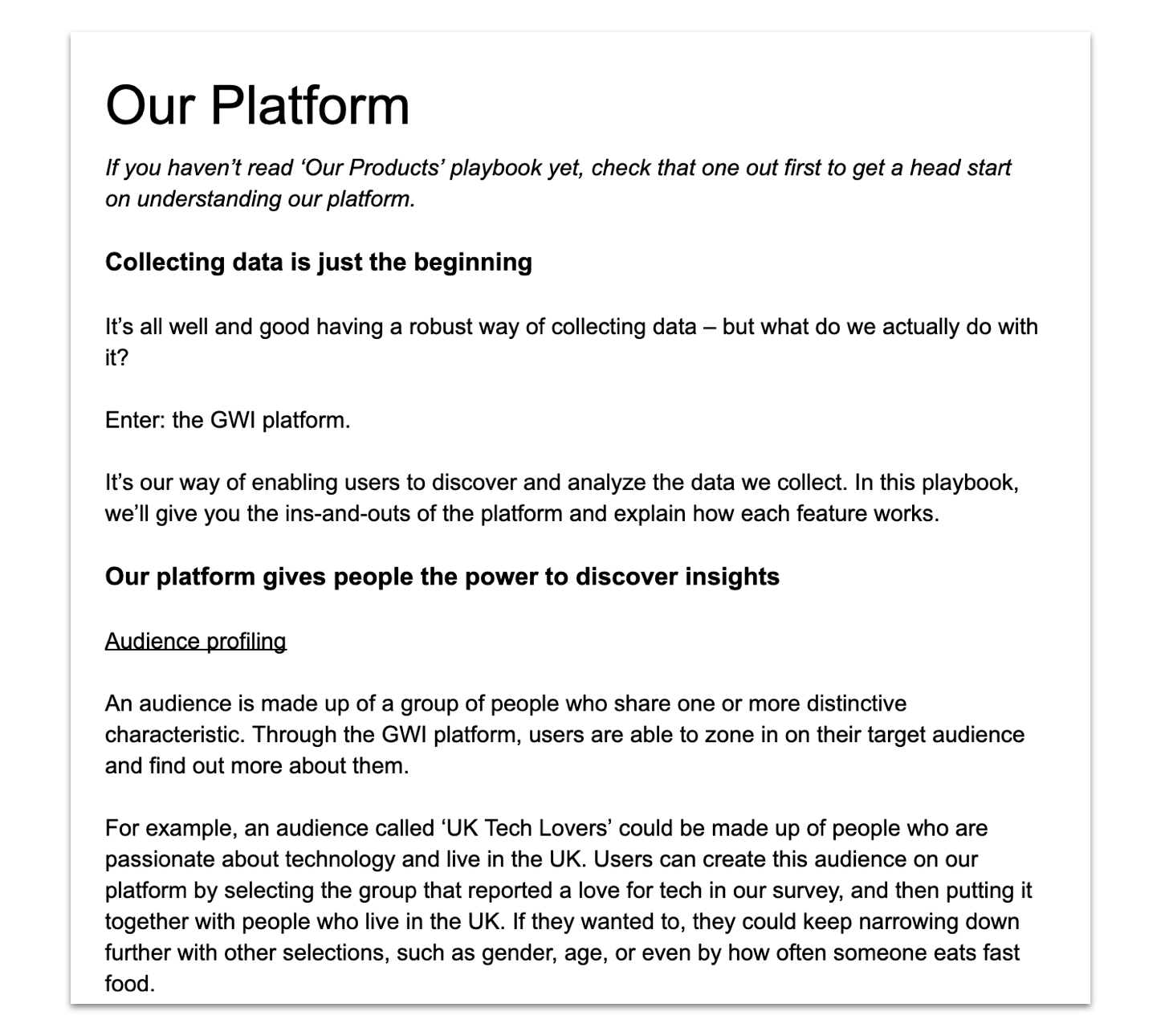
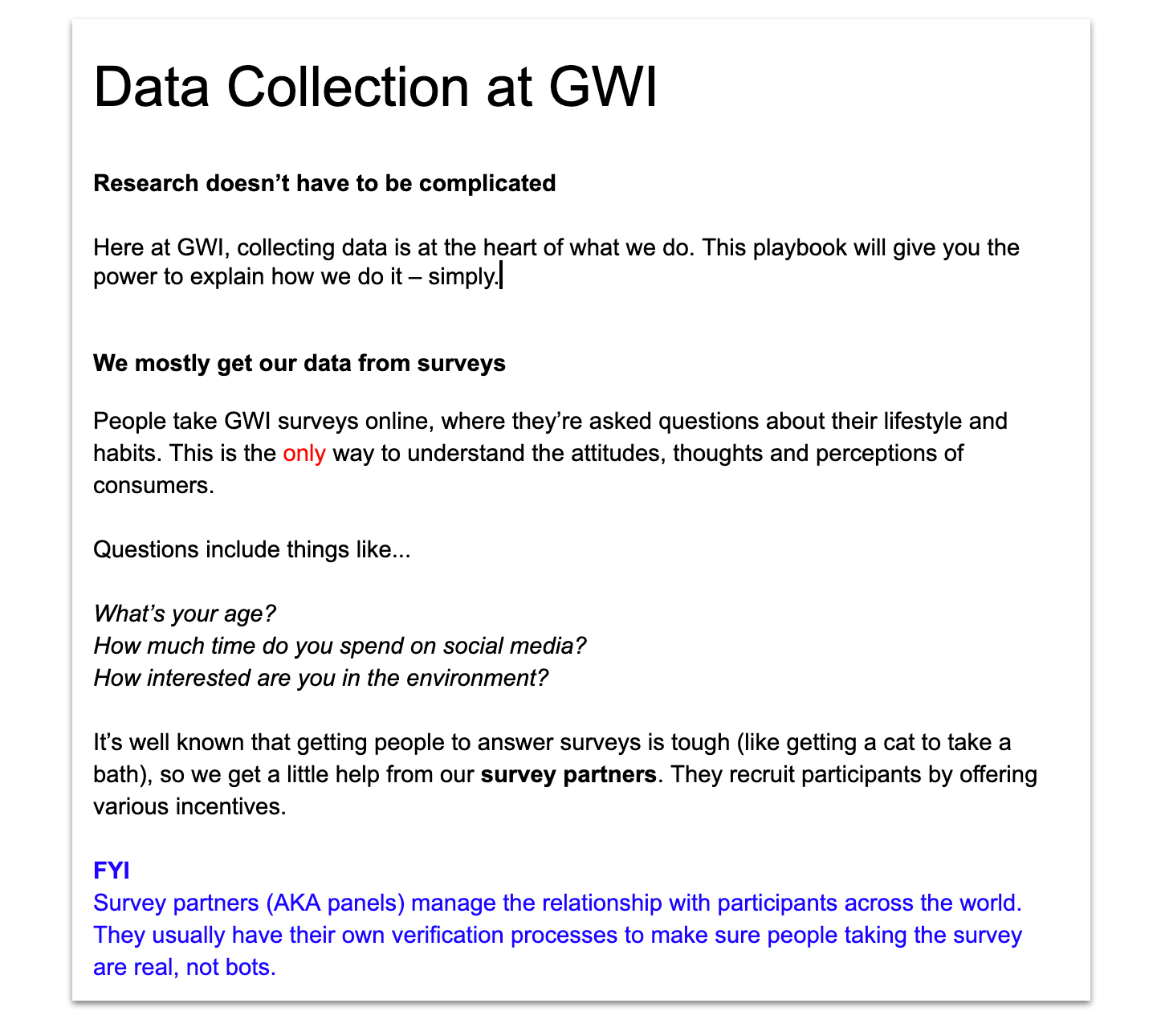
playbooks for everyone! 📖
Continuing with the Research and Methodology piece I worked on, I eventually finished my write-up. In the end, I managed to condense that 36-page PDF in to 3 pages on a Google Doc. Happy days.
Aim 1, complete!
But what about Aim 2? How can I collaborate with designers to get this ready for delivery?
Thankfully throughout this project I was in regular contact with the design team who provided feedback on writing suggestions (for example, I came up with the idea of having ‘FYI’ pieces to explain areas in more detail) which they could then visualise within their designs.
Conclusion 👨🎓
With the write-ups complete, my work was done. The design team had all they needed to produce their visual designs, and the end result is soon to be 8 A5 playbooks (each around 6-8 pages) delivered as PDFs for new starters to sink their teeth into.
For me, as a Product Designer with interest in becoming a specialist in UX writing, this was a fantastic opportunity to demonstrate my abilities. Not only this, but applying that learning method enabled not just me, but the team of excellent writers to have a consistent 4mat of writing.
🏁 You made it! Thanks for reading!
gOT feEDBACK?
Please drop me a message with any questions or comments. Cheers!